Nov 7, 2026·DairyLogs Team
Compare the 10 highest milk yielding cow breeds, from Holstein to Sahiwal, with real yield per lactation, fat %, protein % and which breed suits your farm.
Picking the right breed is the single biggest decision behind how much milk your farm sells. A well-fed Holstein can give three to five times more milk than a native zebu cow, but she also eats more, needs more shade and breaks down faster under heat stress. A Jersey gives less volume but far richer milk.
So "which cow gives the most milk?" has a short answer and a more useful long one.
This guide ranks the 10 highest milk yielding cow breeds using real milk-recording data, then shows you which breed actually pays best in your climate, your feeding system and your milk price. Every figure is per lactation (about 305 days) unless stated.
Quick answer: The Holstein Friesian is the highest milk yielding cow breed in the world, averaging about 11,500 kg of milk per lactation in recorded herds. For hot climates, Sahiwal and Gir are the best milk producing breeds. For milk solids (butterfat and protein), the Jersey leads.
Track each cow's yield free → Start free
The first five rows use 2025 national averages from Canada's official milk-recording program (Canadian Dairy Information Centre). The other five are typical ranges for recorded herds in their main countries. Your herd's numbers will depend on feeding, genetics and management.
Breed | Avg milk per lactation | Avg per day | Fat % | Protein % | Best for |
|---|---|---|---|---|---|
Holstein Friesian | 11,557 kg | ~38 kg | 4.21 | 3.38 | Maximum volume, temperate climates |
Brown Swiss | 9,080 kg | ~30 kg | 4.35 | 3.61 | Cheese milk, longevity |
Ayrshire | 8,615 kg | ~28 kg | 4.22 | 3.47 | Grazing, hardiness |
Fleckvieh (Simmental) | 7,500–8,500 kg | ~25–28 kg | ~4.1 | ~3.5 | Milk plus beef income |
Montbéliarde | 7,500–8,000 kg | ~25–26 kg | ~3.9 | ~3.4 | Cheese, crossbreeding |
Jersey | 7,563 kg | ~25 kg | 5.28 | 3.96 | Butterfat, heat tolerance, small farms |
Guernsey | 7,436 kg | ~24 kg | 4.73 | 3.49 | Premium A2 and golden milk |
Norwegian Red | 6,000–8,000 kg | ~20–26 kg | ~4.2 | ~3.4 | Fertility, health, crossbreeding |
Sahiwal | 2,000–3,000 kg (elite 4,000+) | ~8–12 L | 4.5–5.0 | ~3.3 | Hot climates, tick resistance |
Gir (Gyr) | ~2,100 kg (India avg) | ~6–12 L | ~4.5 | ~3.3 | Tropical heat, low-input systems |
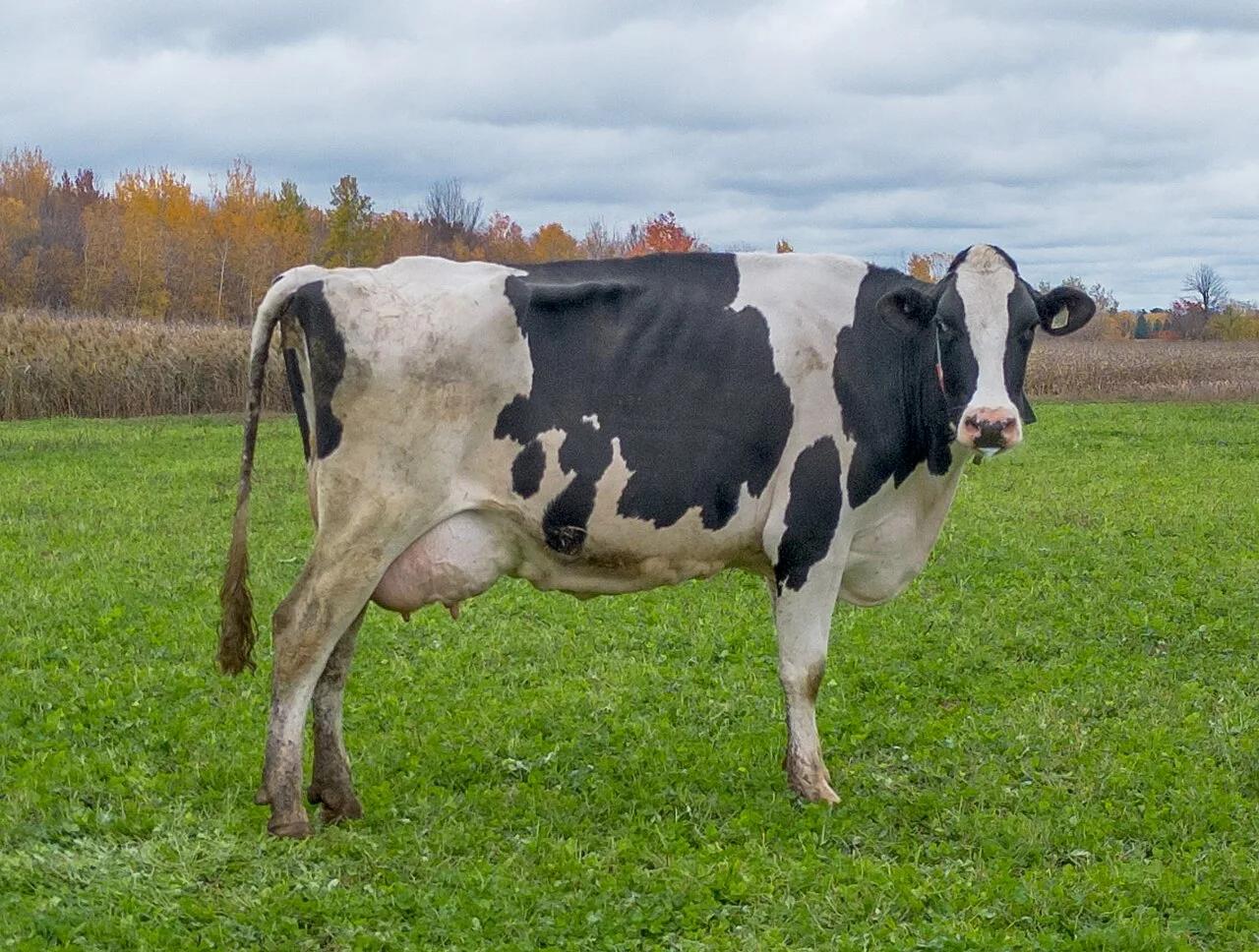
Photo: Hayden Soloviev, CC BY 4.0, via Wikimedia Commons
Origin: Netherlands and northern Germany
Average yield: 11,557 kg per lactation (Canada, 2025); top herds pass 13,000–14,000 kg
Weight: about 650–700 kg
The black-and-white Holstein is the world's most common dairy cow for one reason: nothing else turns feed into litres as efficiently. In well-managed, high-input herds in North America, Europe, Australia and New Zealand, Holsteins regularly average 35–40 kg of milk a day across the whole lactation, with peak days well above that.
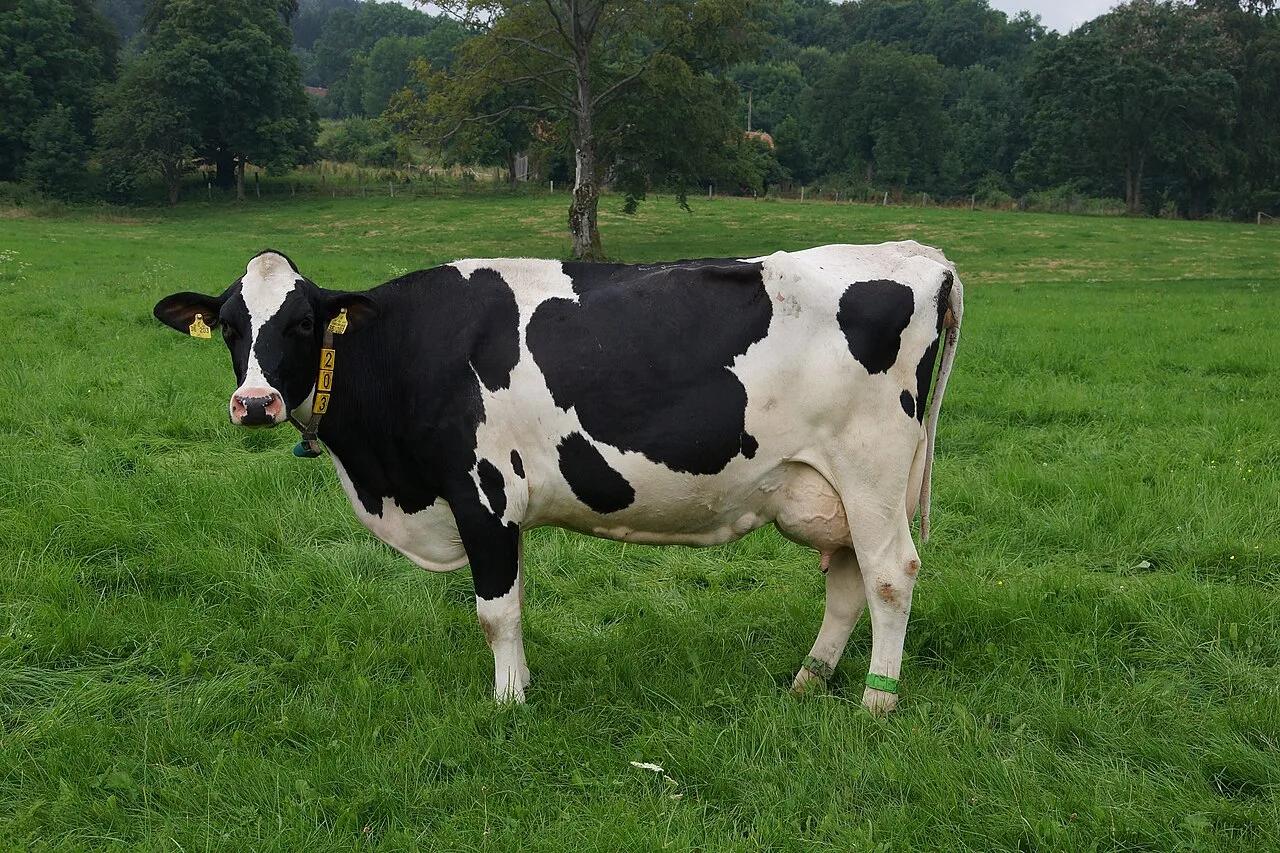
Photo: Verum, CC BY-SA 3.0, via Wikimedia Commons
Watch out for: Holsteins are the least heat tolerant breed on this list and need a tightly balanced, energy-dense ration. In hot climates, pure Holsteins often drop yield sharply in summer and struggle to get back in calf. Fertility and lameness are the main reasons they leave the herd early. If you milk Holsteins, track every cow's daily milk records and breeding events so problems show up early.
Pros: highest volume, huge genetic choice, strong cull-cow value
Cons: high feed cost, heat stress, shorter productive life
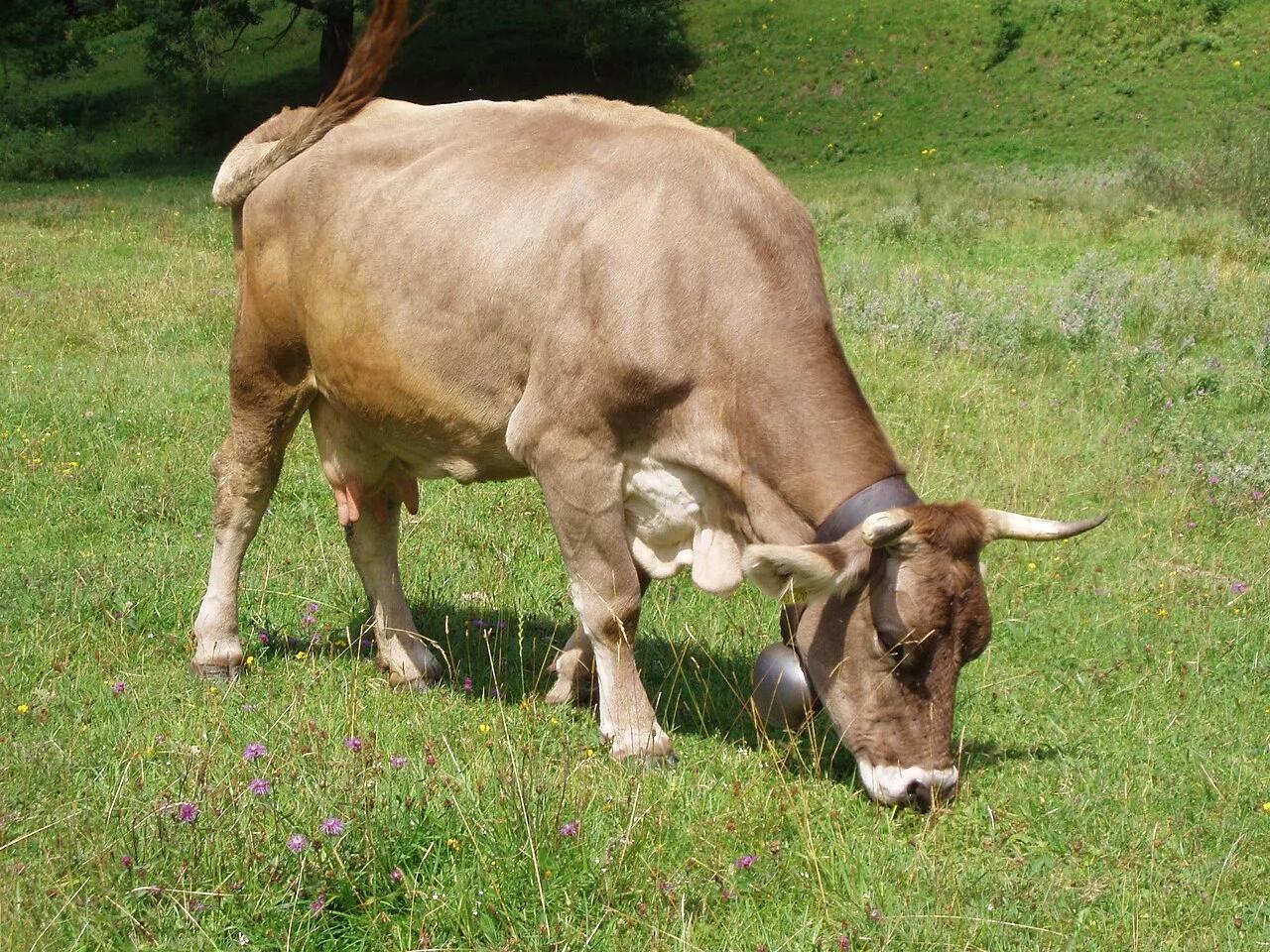
Photo: Xocolatl, Public domain, via Wikimedia Commons
Origin: Swiss Alps
Average yield: 9,080 kg per lactation, 4.35% fat, 3.61% protein
Weight: about 600–700 kg
Brown Swiss are the second highest milk producing breed by volume, and their milk has a favourable protein-to-fat ratio that cheesemakers love. They are calm, long-lived and have strong feet and legs, which is why they cope well on rough ground. They also handle heat better than Holsteins, so they are popular in warmer regions and as a crossbreeding partner.
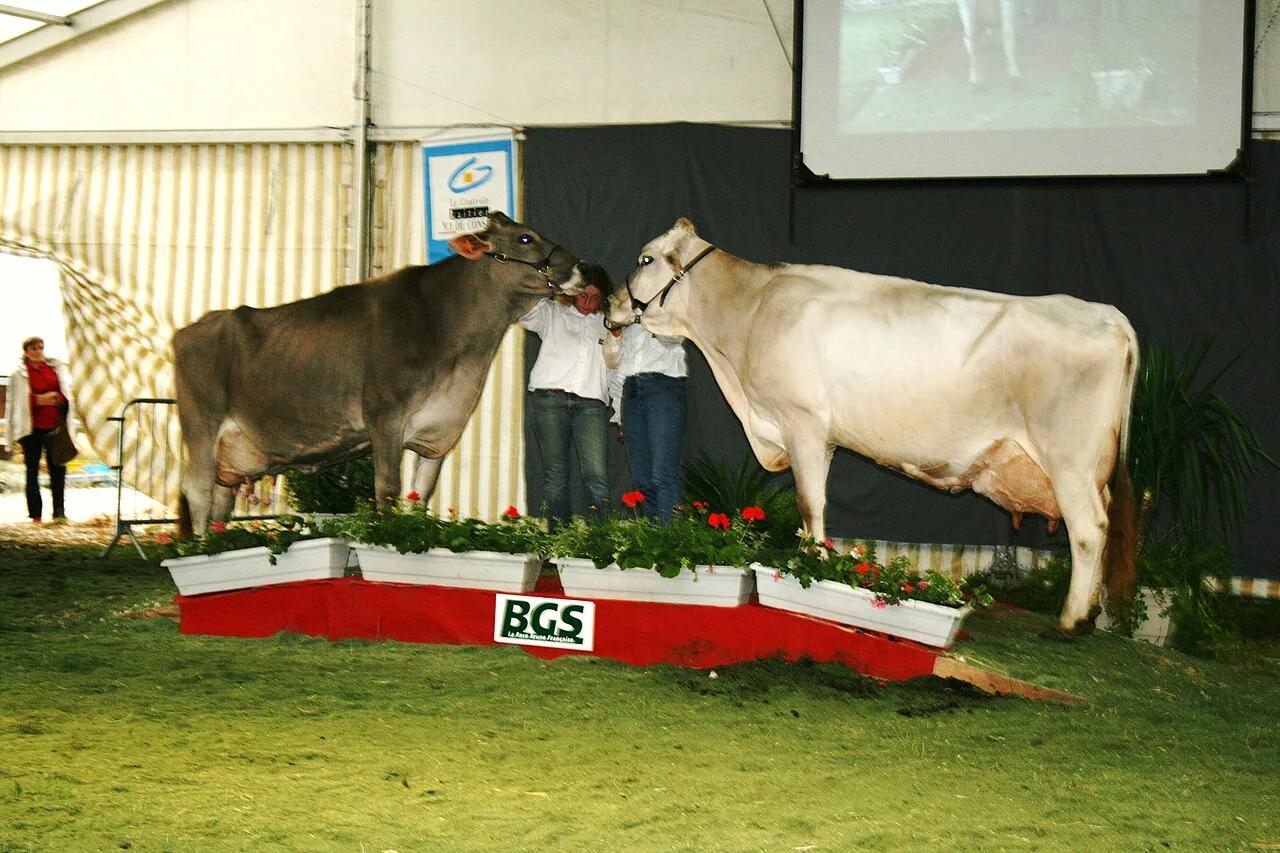
Photo: Philippe Theurey, Public domain, via Wikimedia Commons
Watch out for: they mature slowly, so first calving is often later than a Holstein's.
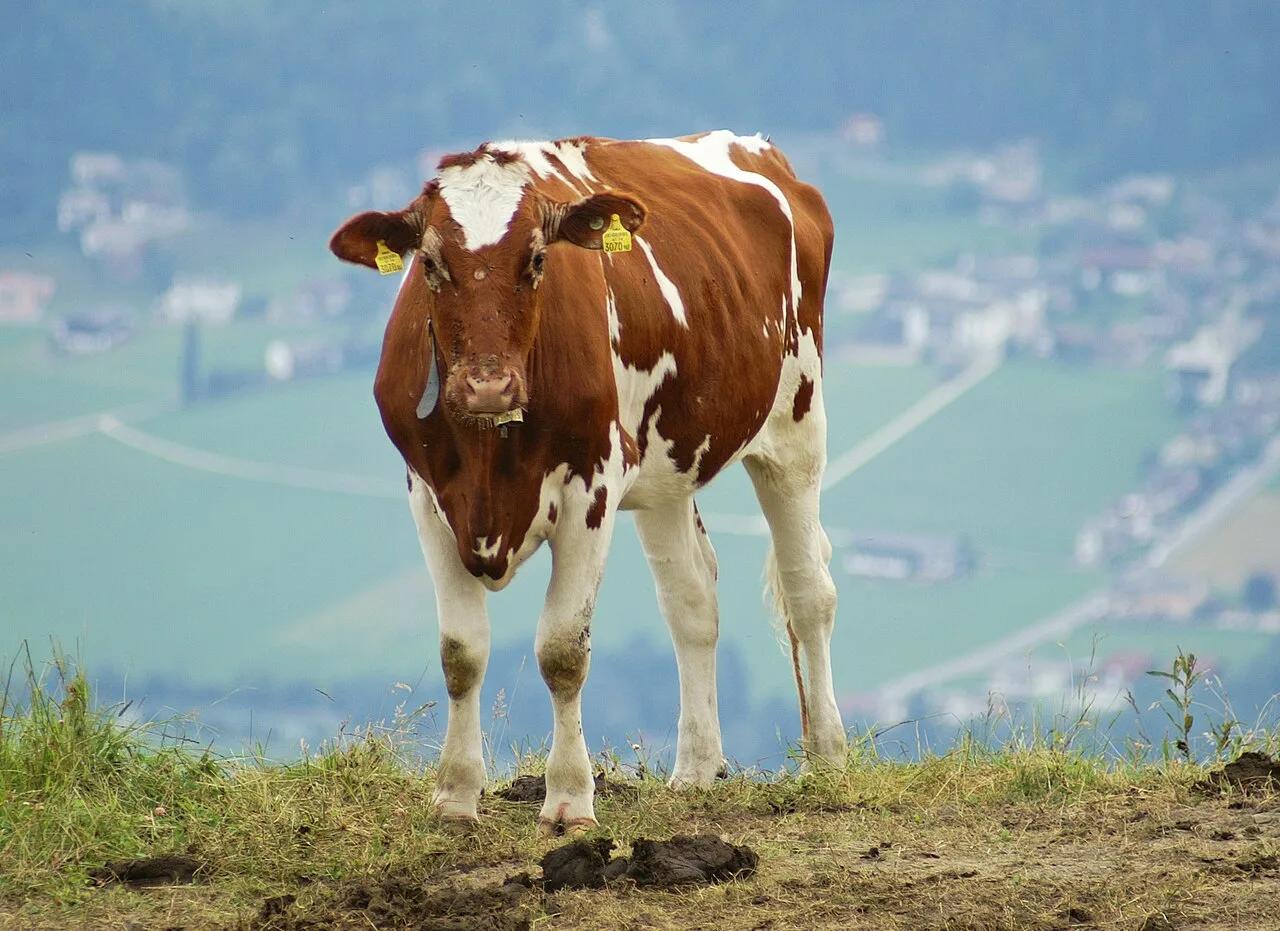
Photo: böhringer friedrich, CC BY-SA 2.5, via Wikimedia Commons
Origin: Ayrshire, Scotland
Average yield: 8,615 kg per lactation, 4.22% fat, 3.47% protein
Weight: about 550 kg
The red-and-white Ayrshire was bred in harsh Scottish conditions, so she forages well, calves easily and stays sound for many lactations. Her yield is lower than a Holstein's, but her lower maintenance needs make her a strong choice for pasture-based farms.
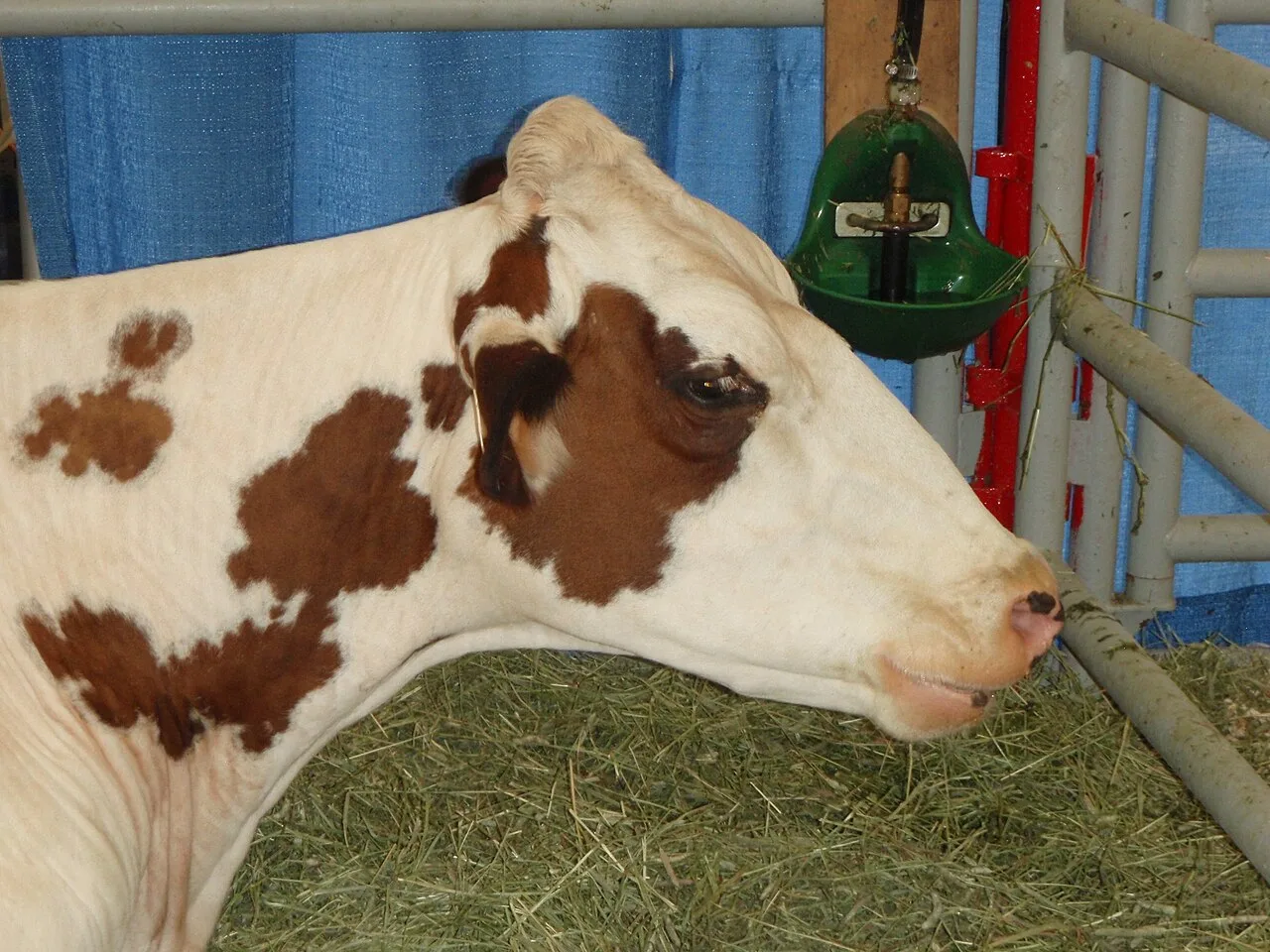
Photo: Sergei S. Scurfield, CC BY-SA 3.0, via Wikimedia Commons
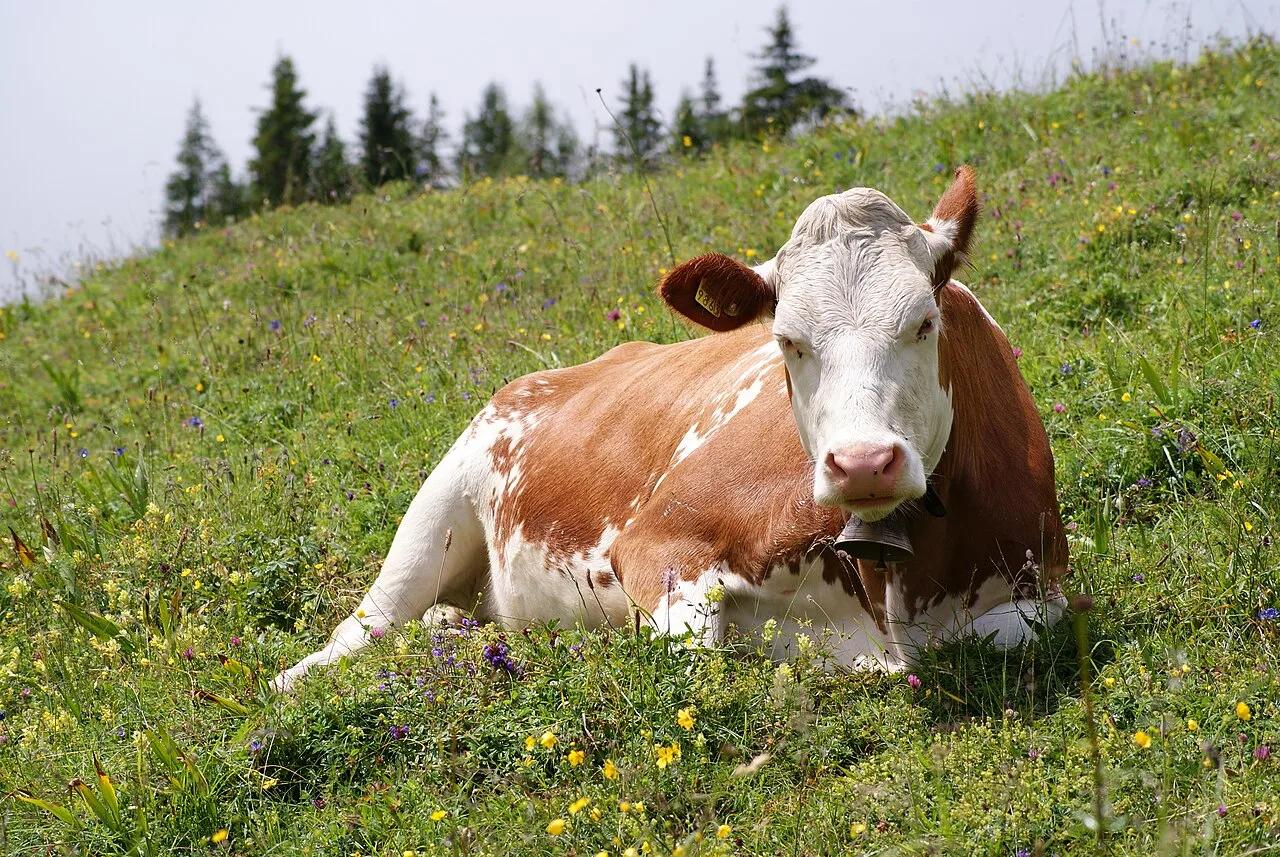
Photo: Kim Hansen, CC BY-SA 3.0, via Wikimedia Commons
Origin: Germany and Austria (from Swiss Simmental)
Typical yield: 7,500–8,500 kg per lactation in recorded herds
Weight: about 700–800 kg
Fleckvieh is the dairy-type Simmental and one of the best dual-purpose cattle breeds. You get solid milk volume with good components, plus bull calves and cull cows that bring real beef money. For farms that sell both milk and meat, total income per cow can match or beat a pure dairy breed.
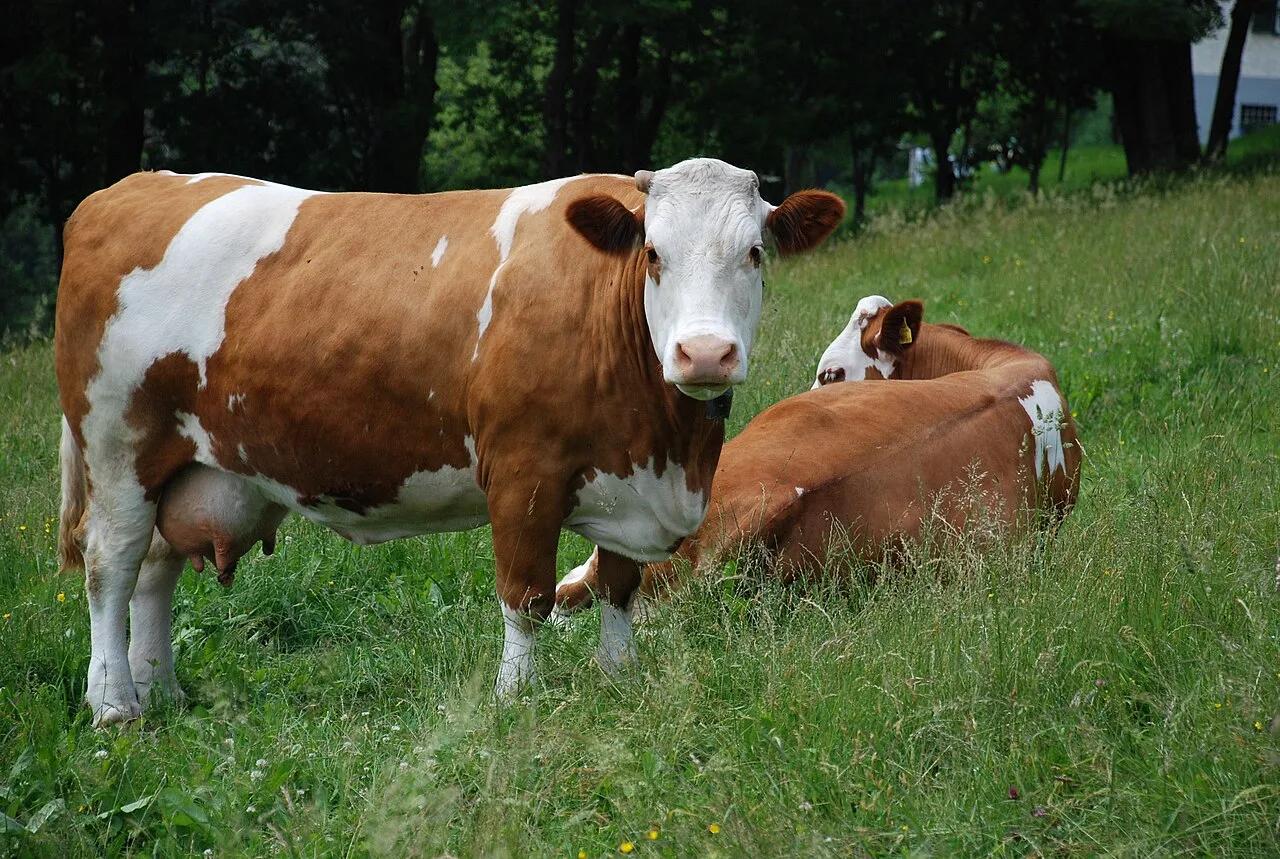
Photo: Josef Moser, CC BY-SA 3.0, via Wikimedia Commons
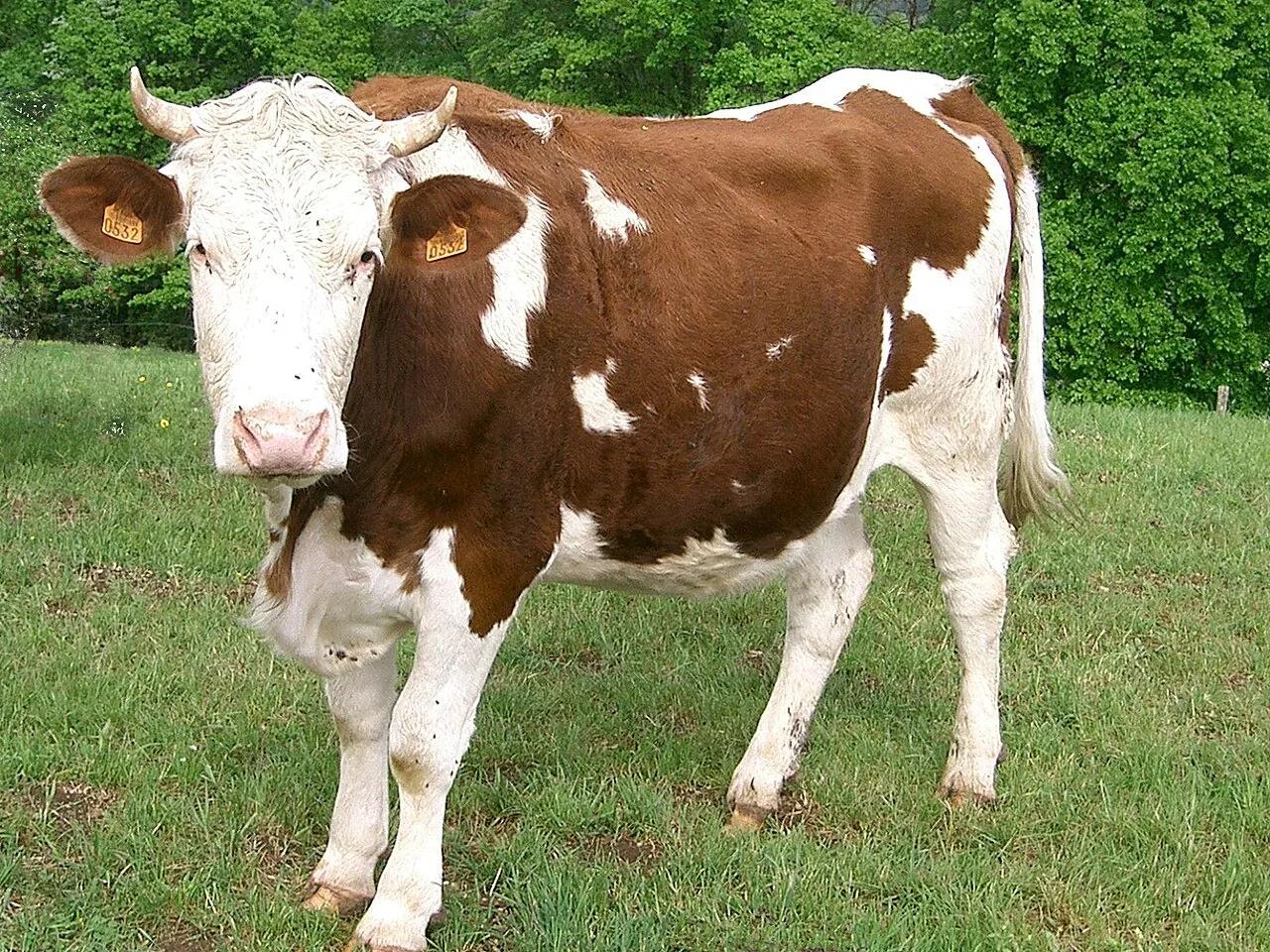
Photo: PRA, CC BY 2.5, via Wikimedia Commons
Origin: eastern France
Typical yield: 7,500–8,000 kg per lactation
Weight: about 650–700 kg
Montbéliarde milk goes into famous French cheeses such as Comté, thanks to its high protein and good cheese yield. The breed is known for strong fertility, good udders and a heavy carcass. It is widely used in three-way crossbreeding with Holstein and Viking Red to bring back fertility and health without losing too much volume.
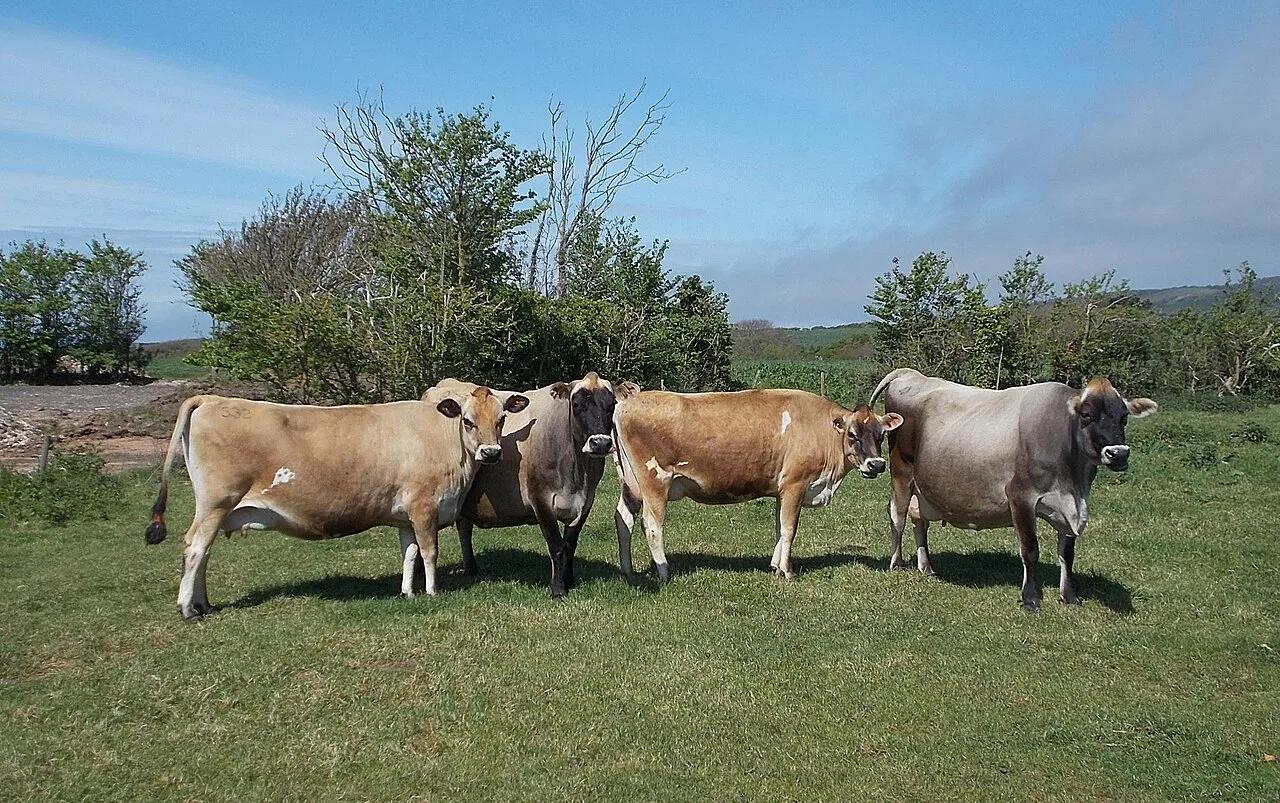
Photo: ITookSomePhotos, CC BY-SA 4.0, via Wikimedia Commons
Origin: Isle of Jersey, Channel Islands
Average yield: 7,563 kg per lactation, 5.28% fat, 3.96% protein
Weight: about 400–450 kg
Jerseys produce less volume, but their milk is the richest of any major dairy breed. On a per-kilogram-of-body-weight basis they are some of the most efficient cows alive. They tolerate heat better than Holsteins, calve easily, get back in calf quickly and are popular on grazing farms in Australia and New Zealand, where farmers are paid for milk solids rather than litres.
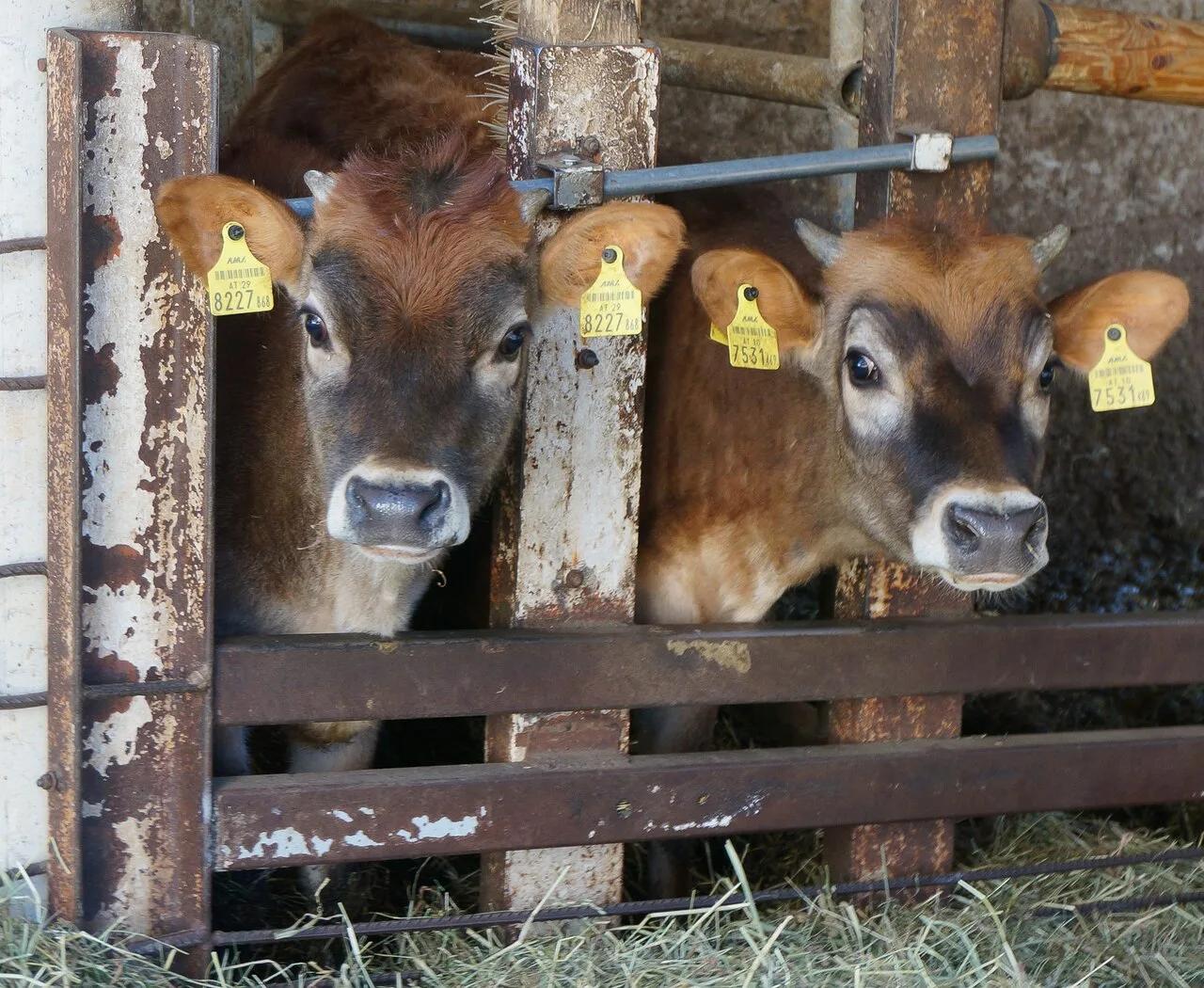
Photo: Naturpuur, CC BY 4.0, via Wikimedia Commons
Watch out for: Jerseys are more prone to milk fever around calving, so manage the transition diet carefully. Our dry-off and late pregnancy feeding guide explains how.
Free tool: High-yielding breeds only pay off when the ration matches their output. Work out a balanced daily ration and its cost for your herd in under a minute. Open the Cow Feed Calculator →
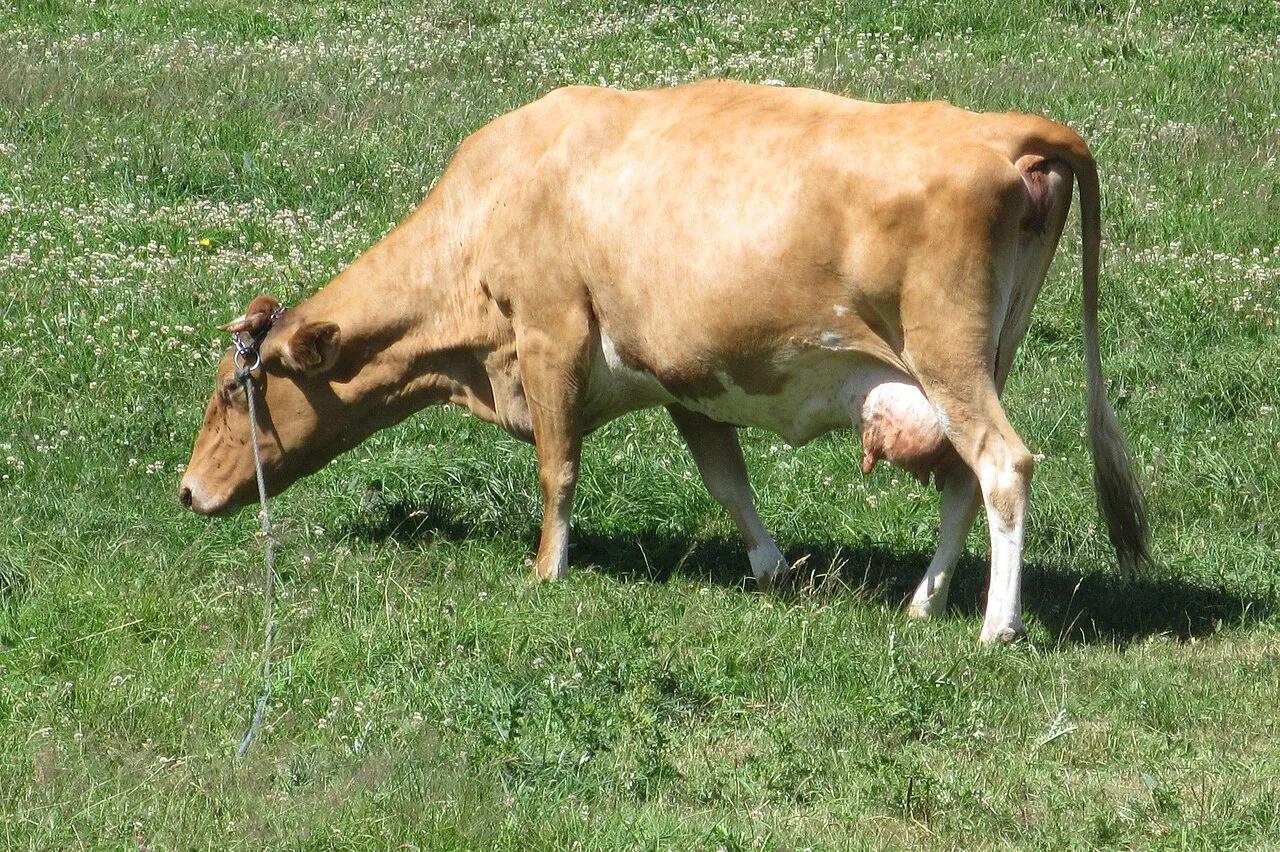
Photo: Man vyi, Public domain, via Wikimedia Commons
Origin: Isle of Guernsey, Channel Islands
Average yield: 7,436 kg per lactation, 4.73% fat, 3.49% protein
Weight: about 450–500 kg
Guernsey milk has a golden colour from its high beta-carotene content, and a large share of the breed carries the A2 beta-casein gene. That makes Guernseys a good fit for farms selling premium, A2 or farm-gate milk at a higher price per litre. They are gentle, efficient grazers.
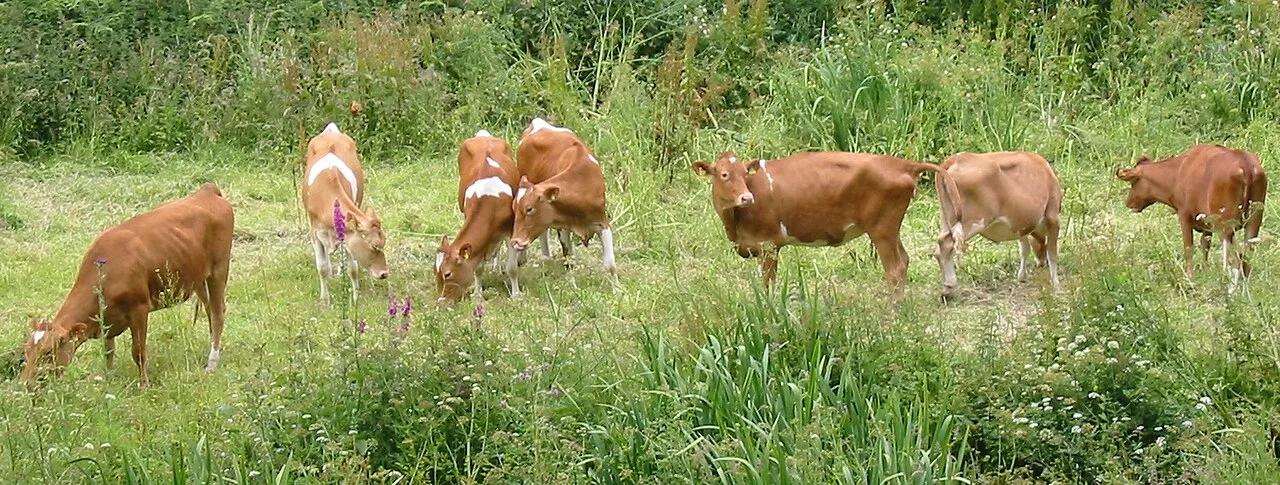
Photo: Man vyi, Public domain, via Wikimedia Commons
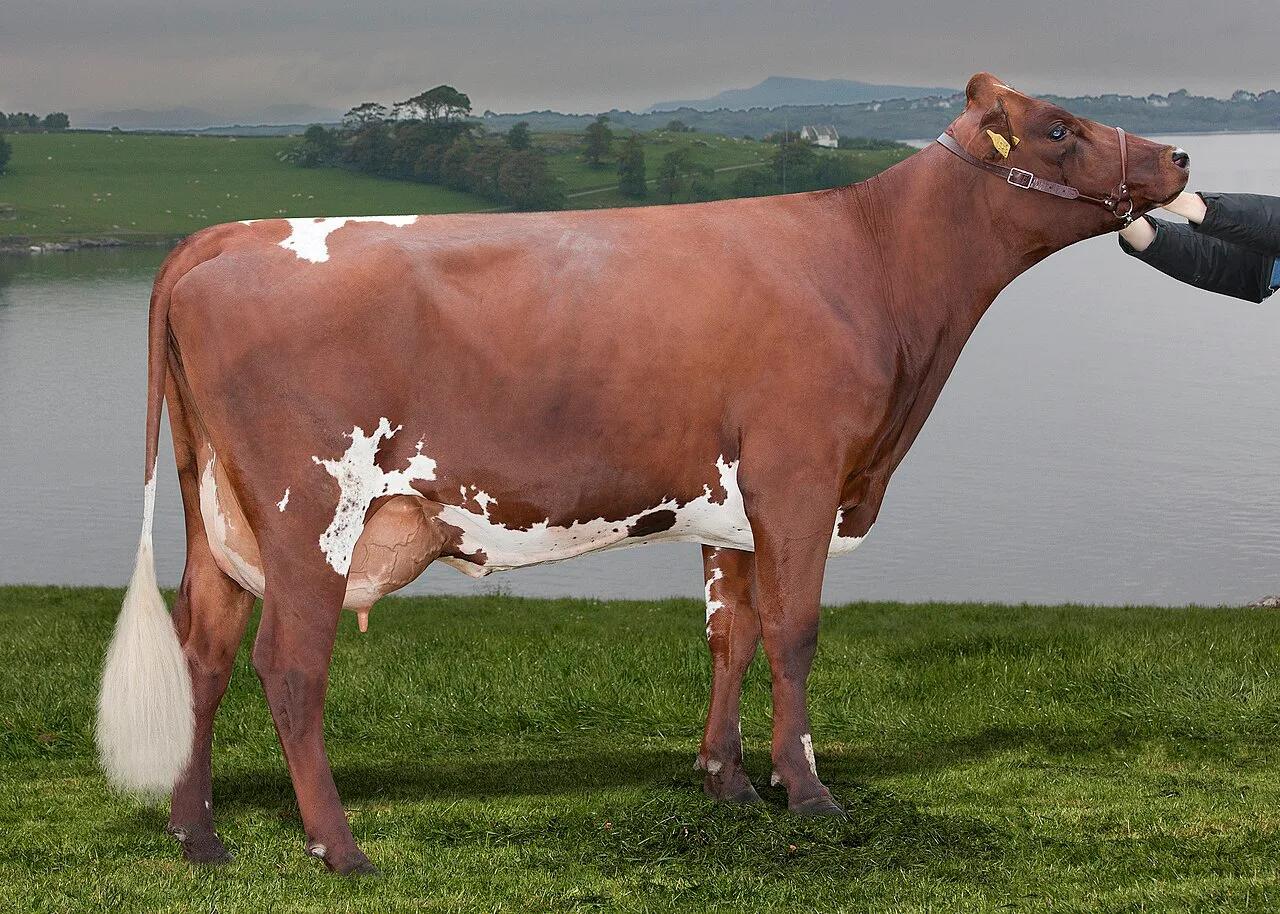
Photo: Lucinda Morgan, CC BY-SA 3.0, via Wikimedia Commons
Origin: Norway
Typical yield: 6,000–8,000 kg per lactation
Weight: about 550–600 kg
Norway has selected for fertility, mastitis resistance and calving ease for decades, so Norwegian Red cows tend to need fewer vet visits and stay in the herd longer. Many farmers cross them onto Holsteins to cut calving interval and health costs while keeping good yields. When you count lower treatment and replacement costs, profit per cow often beats a higher-yielding but less robust breed.
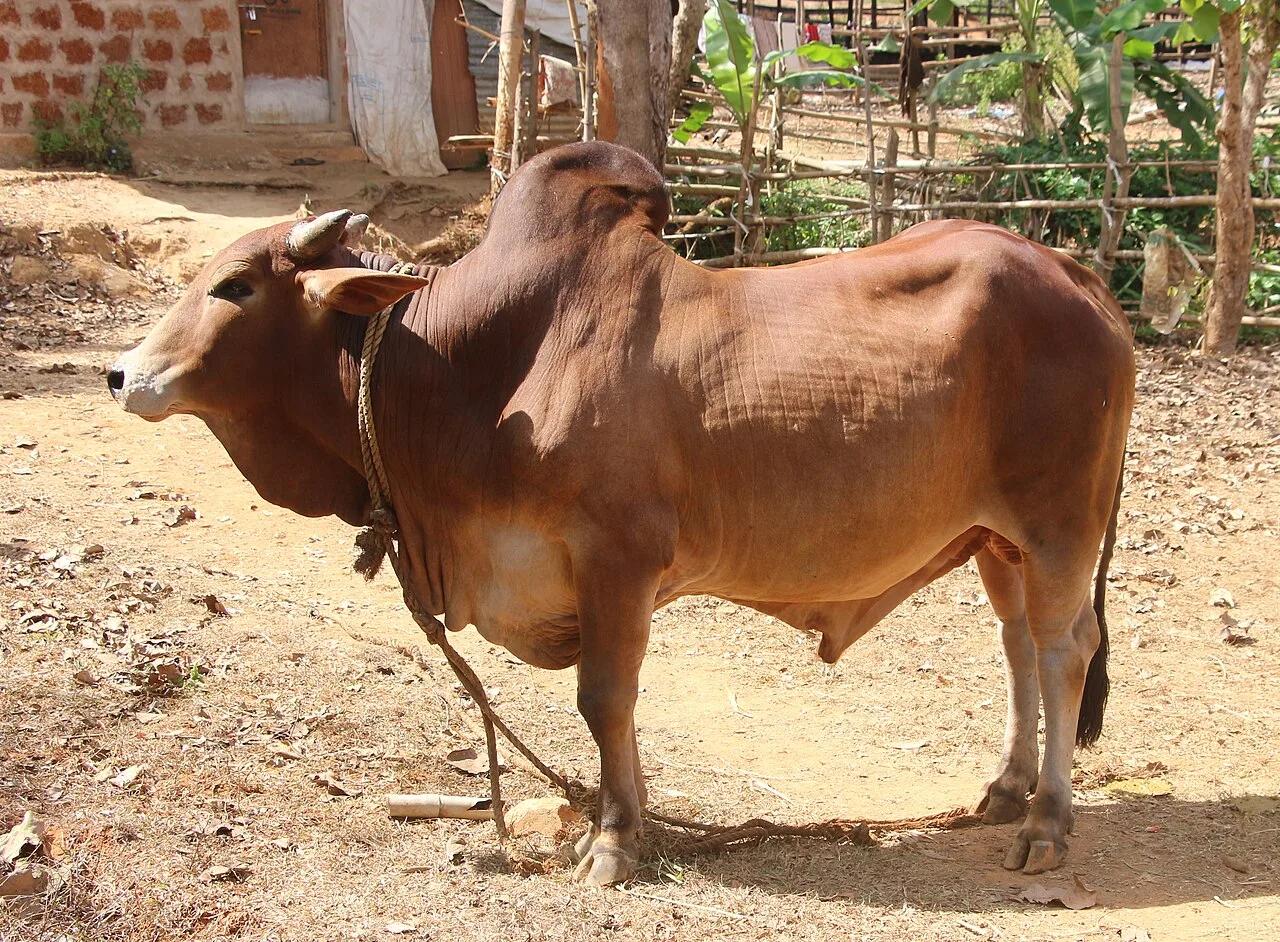
Photo: Pavanaja, CC BY-SA 3.0, via Wikimedia Commons
Origin: Sahiwal district, Punjab, Pakistan
Typical yield: 2,000–3,000 kg per lactation on farms; elite cows exceed 4,000 kg
Fat: about 4.5–5.0%
Sahiwal is widely regarded as the best dairy zebu (Bos indicus) breed. She tolerates heat above 40°C, resists ticks and tick-borne disease, and keeps milking on poor-quality forage where a Holstein would collapse. That is why Sahiwal genetics are used across South Asia, Africa and northern Australia, where the Australian Milking Zebu was developed by crossing Sahiwal and Red Sindhi bulls with Jersey cows.
Sahiwal x Holstein or Sahiwal x Jersey crosses are popular in Pakistan and India because they combine heat tolerance with higher yield. Feeding matters just as much as genetics, so use our cow feed calculator to balance the ration to her actual milk output.
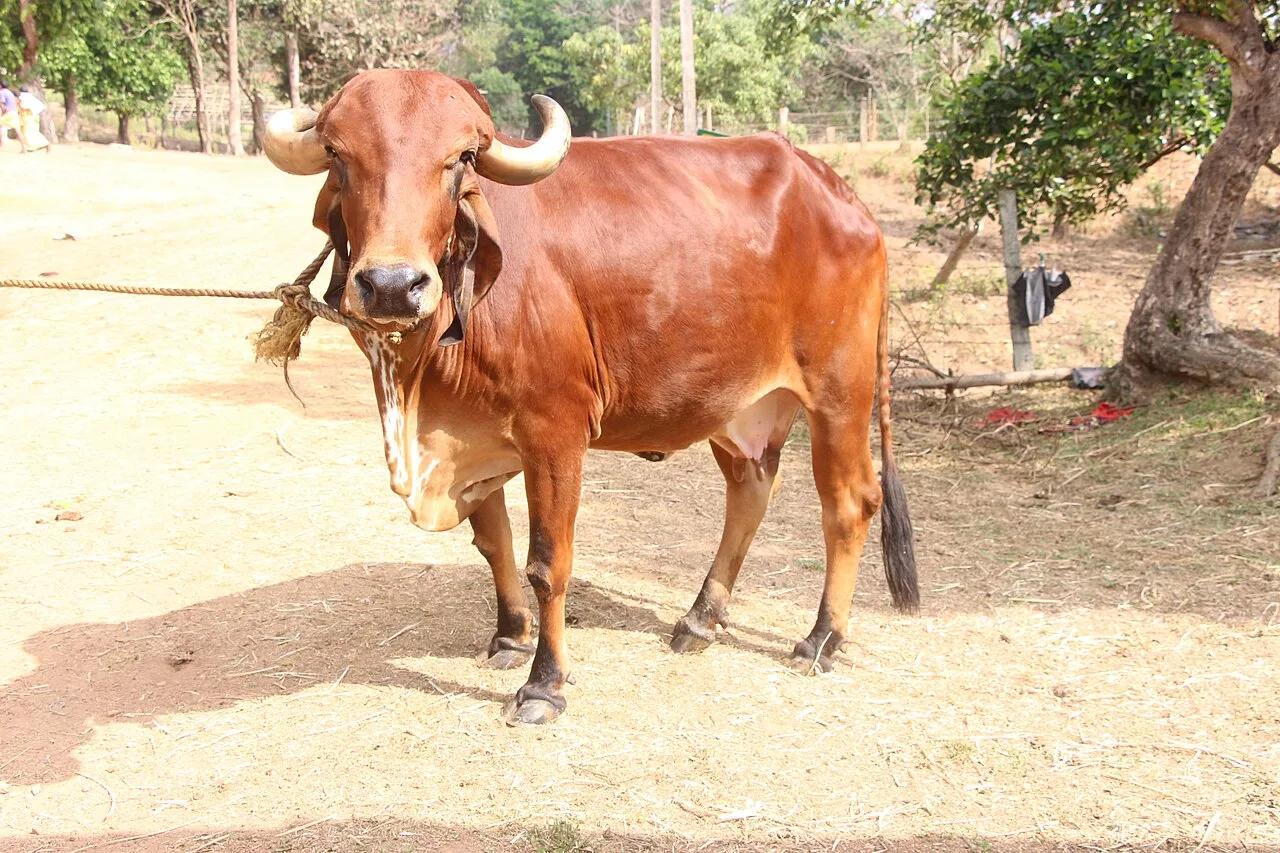
Photo: Pavanaja, CC BY-SA 3.0, via Wikimedia Commons
Origin: Gir forest region, Gujarat, India
Typical yield: about 2,100 kg per lactation in India; selected Brazilian Gir Leiteiro herds produce much more
Fat: about 4.5%
Gir cattle are easy to spot by their domed forehead, long drooping ears and curved horns. They are extremely heat and disease tolerant. Brazil has built a large dairy Gir population (Gir Leiteiro) and crossed it with Holsteins to create the Girolando, which now supplies a big share of Brazil's milk.
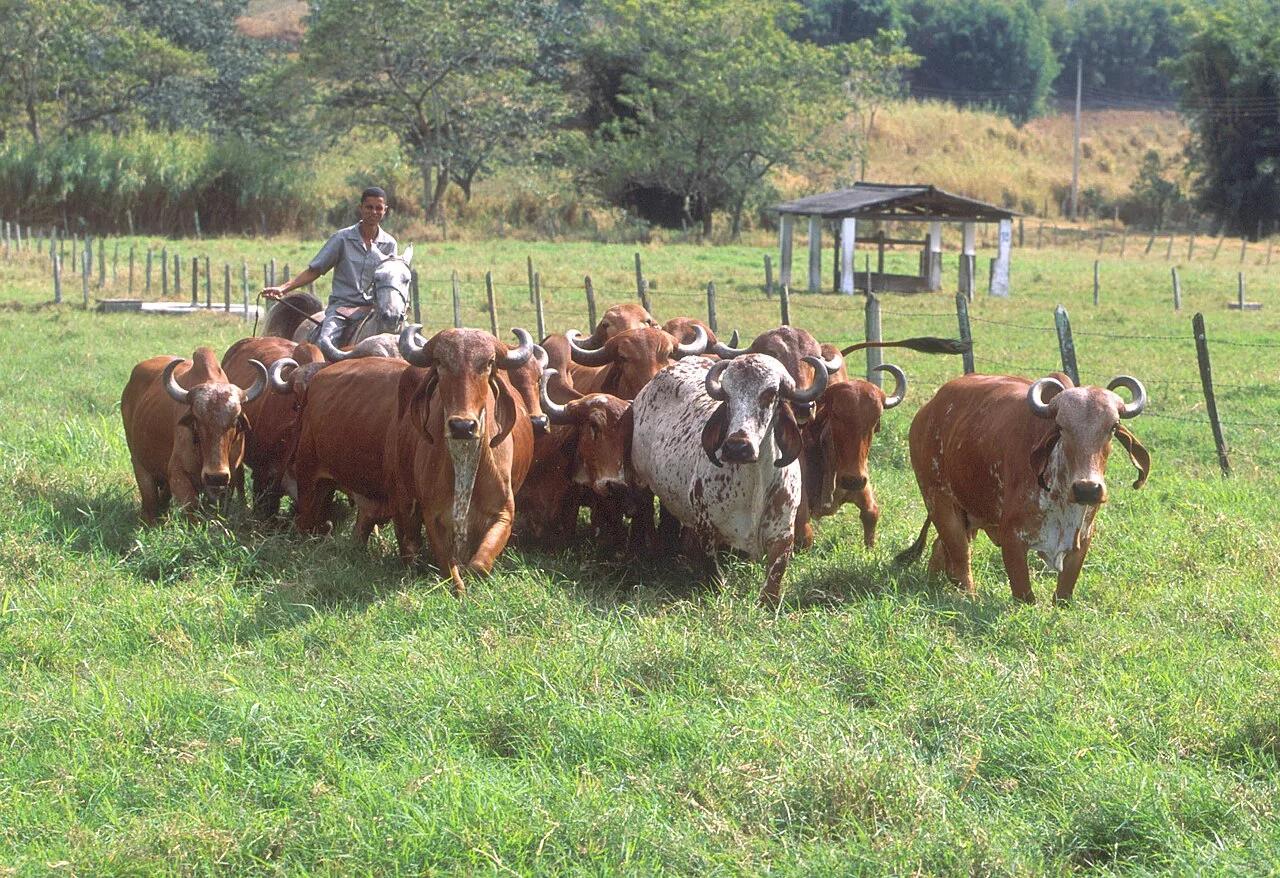
Photo: Scott Bauer, USDA ARS, Public domain, via Wikimedia Commons
If your processor pays on butterfat and protein, rank breeds by kg of milk solids, not litres. Using the 2025 Canadian averages above:
Holstein: 11,557 kg × 7.59% = about 877 kg of fat + protein
Brown Swiss: 9,080 kg × 7.96% = about 723 kg
Jersey: 7,563 kg × 9.24% = about 699 kg
Ayrshire: 8,615 kg × 7.69% = about 662 kg
Guernsey: 7,436 kg × 8.22% = about 611 kg
The Holstein still wins per cow, but a Jersey weighs roughly a third less. On pasture, you can usually run more Jerseys on the same land, so milk solids per hectare can end up higher. That is the main reason Jerseys and Jersey crosses dominate many grazing farms in Australia and New Zealand.
Climate: In hot, humid regions, choose Sahiwal, Gir, Jersey or crossbreds. In cool climates with housed cattle, Holstein or Brown Swiss will out-yield the rest.
Feed supply: High-yield breeds only deliver if they get enough energy and protein. If your forage is poor, a hardier breed will often make more profit. See our daily ration guide for milking cows.
How you are paid: Paid per litre? Go for volume (Holstein). Paid for solids, cheese or premium milk? Look at Jersey, Brown Swiss, Montbéliarde or Guernsey.
Fertility and health: A cow that does not get back in calf stops making money. Breeds such as Norwegian Red, Jersey and Montbéliarde are strong here. Tight heat detection matters for every breed.
Local genetics and vets: Choose a breed that you can buy semen for locally and that your vet knows well.
A top-genetics Holstein on a bad ration will give less milk than a well-managed crossbred. To get the most from any breed:
Record every cow's milk daily so you can spot drops and cull low producers with real numbers. Our culling decision calculator helps you decide.
Check body condition score at calving, peak and dry-off.
Time breeding with the heat detection calculator and the guide to logging heats.
Plan calvings with the calving date calculator.
Prevent the diseases that cut yield most, such as mastitis and ketosis. See our dairy cattle diseases guide.
Protect yield in cold weather by avoiding these winter mistakes that reduce milk production.
The Holstein Friesian. Recorded Holsteins average around 38 kg of milk a day over a full lactation, and high-producing cows can exceed 50 kg a day at peak.
Sahiwal and Gir are the best dairy breeds for hot climates. Among European breeds, Jersey and Brown Swiss cope with heat better than Holstein. Crossbreds such as Sahiwal x Holstein or Girolando give a balance of heat tolerance and yield.
The Jersey, with about 5.3% butterfat and 4.0% protein, followed by the Guernsey.
The Sahiwal is the best native dairy breed in Pakistan. For higher yields, many commercial farms use Holstein Friesian or Holstein x Sahiwal crossbreds with good cooling and feeding.
It ranges from about 2,000 litres for native zebu breeds to over 11,000 litres for Holsteins in well-managed herds. Yield also tends to rise from the first to the third lactation.
Whatever breed you milk, the farms that make the most money are the ones that measure. DairyLogs lets you record milk per cow, track breeding and calving, plan rations and spot sick or low-yielding cows early, all from your phone. Start your free DairyLogs account and see exactly which of your cows are paying their way.
With a free DairyLogs account you can:
Record milk per cow at every milking and see your top and bottom producers
Compare yield by breed, lactation and days in milk
Track breeding, calving and health for every animal from your phone
Create your free DairyLogs account → No credit card needed.
Want tools that match these practices? Start free with DairyLogs.