Nov 2, 2026·DairyLogs Team
Milk dropping in winter? Avoid these 5 mistakes: icy water, summer feed, a sealed shed, wet bedding and cold calves. Simple fixes to keep milk up all season.

Low milk production in winter is mostly caused by management, not the cold itself. The five most common winter mistakes are giving cows icy water, feeding a summer ration, sealing the shed shut, leaving bedding wet and forgetting the calves. Fix them with clean lukewarm water, more dry fodder, fresh air without drafts, deep dry bedding and extra calf care, and most herds hold their milk right through the cold months.
Every winter the same story plays out on dairy farms. The temperature falls, and the milk falls with it. Many farmers accept this as normal.
It does not have to be. A healthy, well-fed dairy cow copes with cold far better than with heat. When milk production drops in winter, the cause is usually something we changed (or forgot to change) in the shed, the trough or the feed.
This guide covers the five winter mistakes that quietly cut milk yield, what each one does to your cow, and exactly what to do instead.
Spot winter milk drops cow by cow, free → Start free
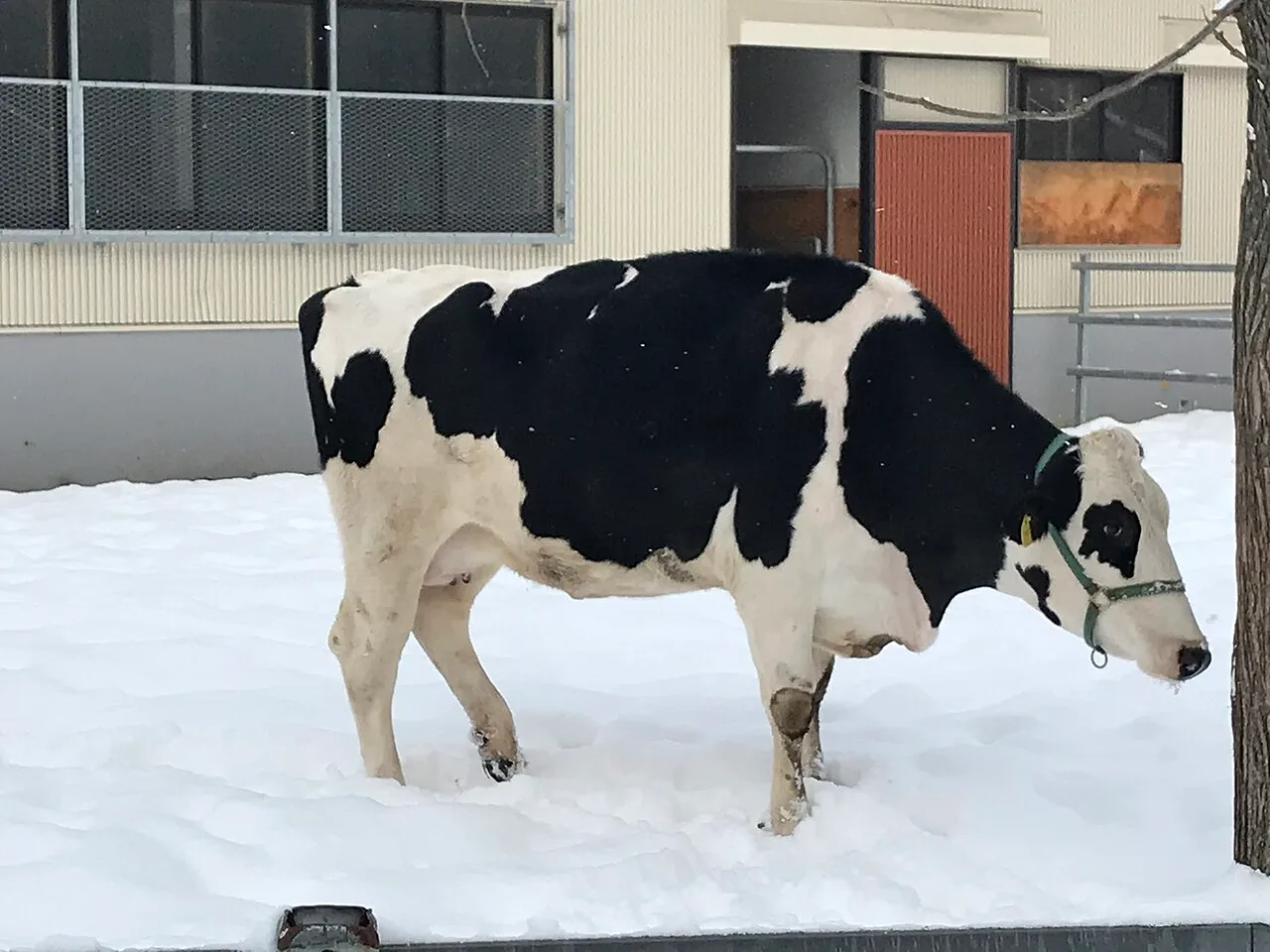
Photo: ノボホショコロトソ, CC BY-SA 3.0, via Wikimedia Commons
A cow has to keep her body at about 38.5°C before she spends any energy on milk. Every cow has a lower critical temperature: the point below which she must burn extra feed just to stay warm. That energy comes straight out of the milk tank.
A cow with a dry, thick winter coat can handle a wind chill of roughly -7°C (19°F) before cold stress starts. A wet coat changes everything. According to University of Nebraska specialists writing in Hay & Forage Grower, a wet cow's lower critical temperature jumps to about 12°C (53°F), and energy needs rise by about 1% for every °F (nearly 2% per °C) below that point. Vita Plus estimates maintenance energy can rise 10% to 50% in cold weather, depending on how severe it is.
On top of that, cows drink less when water is freezing, and a cow that drinks less also eats less. Less water plus less feed plus more energy spent on warmth always equals less milk. If you know what a cow should yield at her stage of lactation, you can spot a winter drop early instead of blaming the weather.
Winter mistake | What it does to your cow | What to do instead |
|---|---|---|
❌ Icy water | She drinks less, eats less and milks less | ✅ Clean, lukewarm water |
❌ Summer feed in winter | Not enough energy or body heat from the ration | ✅ More dry fodder (it warms her from the inside) |
❌ Sealing the shed shut | Damp air, ammonia and pneumonia | ✅ Fresh air up high, no cold drafts |
❌ Wet bedding | A wet coat loses its insulation; more mastitis | ✅ Deep, dry bedding (a wet cow is a cold cow) |
❌ Forgetting the calves | Calves burn milk energy for warmth instead of growth | ✅ Deep straw + calf jacket + extra milk |
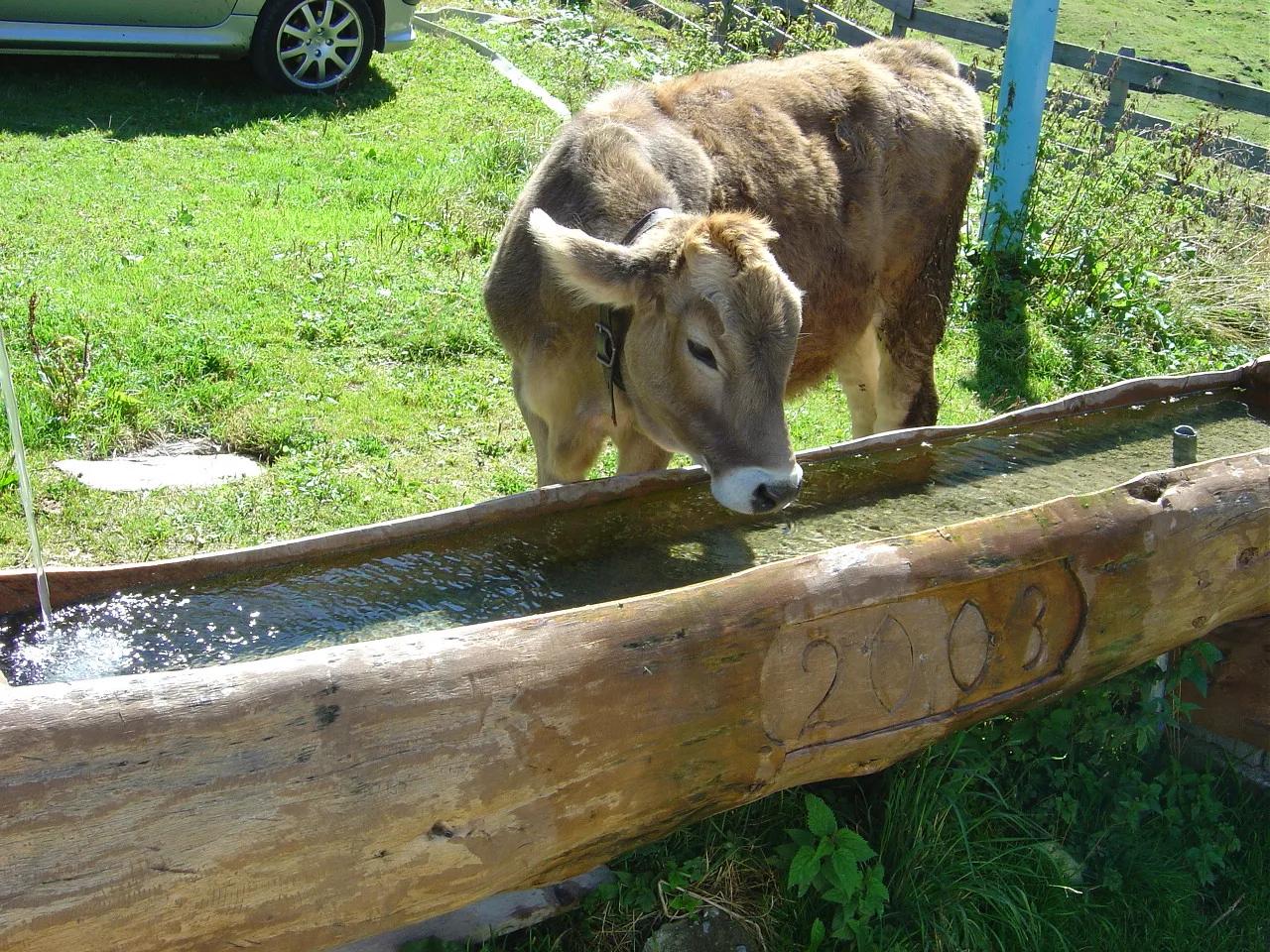
Photo: Andreas Cappell, CC BY 2.0, via Wikimedia Commons
Milk is about 87% water. A milking cow can drink 80 to 150 litres a day depending on her yield, and she cannot make milk from water she refuses to drink. In winter, water left in open troughs overnight gets ice-cold or freezes over. Cows take a few sips and walk away.
University of Minnesota Extension notes that cows prefer water between about 4°C and 18°C (40 to 65°F), and that frozen or very cold water significantly limits both water and feed intake.
Take the chill off. Offer lukewarm water, not hot. On small farms, mixing in some warm water before the morning and evening drink works well. On bigger farms, use insulated or heated troughs.
Break the ice every morning and check water lines and float valves for freezing before milking.
Keep troughs clean. Cows refuse dirty or smelly water even more than cold water. Scrub troughs at least once a week.
Offer water right after milking and feeding, when cows naturally want to drink the most.
Check flow. A cow can drink 11 to 19 litres per minute, so a slow trickle from one pipe will not keep up with a whole group.
Water intake shows up in the milk the very next day. Recording milk every day with DairyLogs milk recording lets you catch a sudden drop and trace it back to a frozen trough before you lose a week of production.
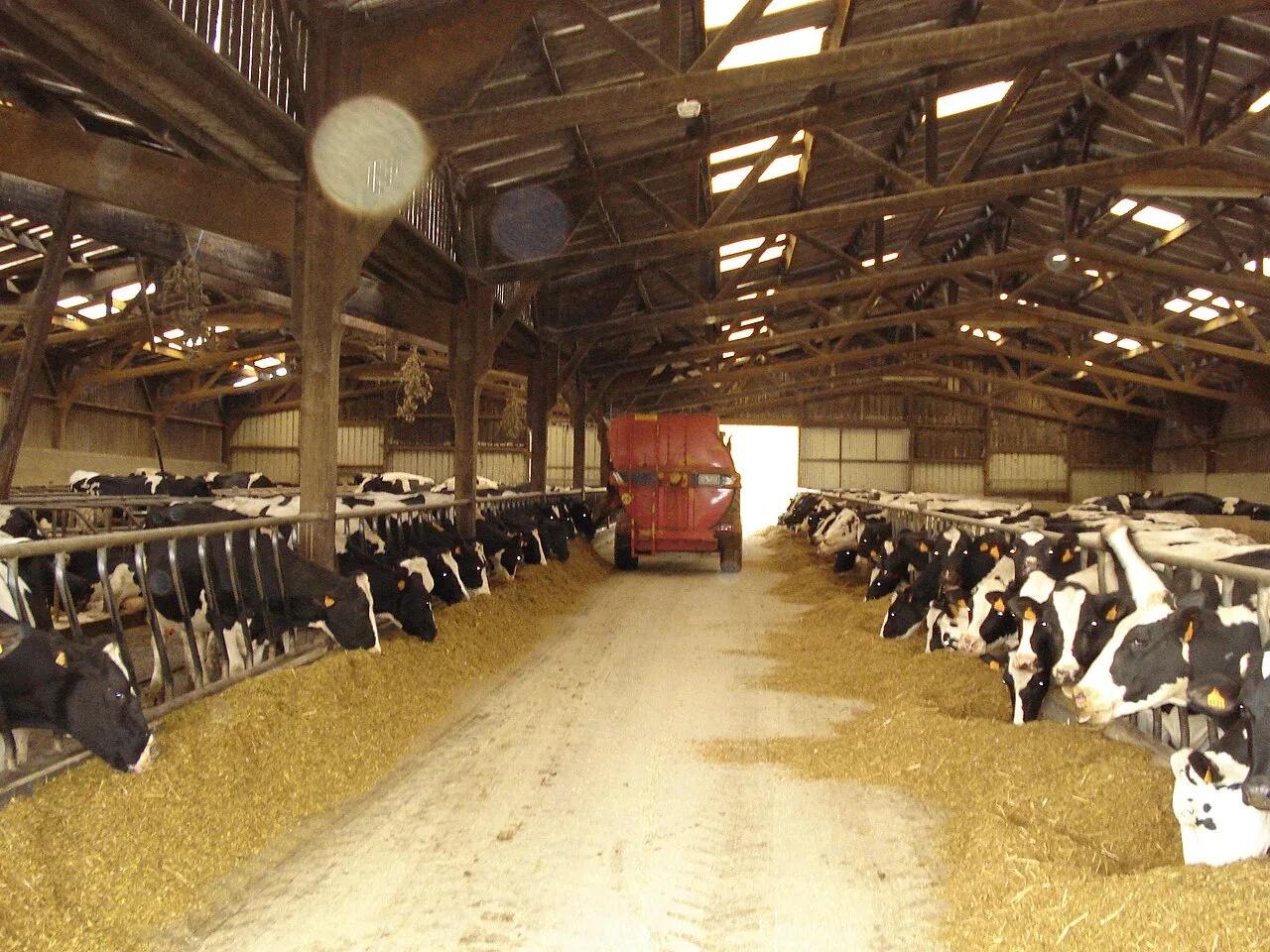
Photo: Tractorboy60, public domain, via Wikimedia Commons
Many farmers keep feeding the exact same ration all year. Summer rations are often heavy on green, watery fodder. In winter, that ration does not give a cow enough energy to keep warm and still produce milk.
Here is the useful part: when rumen microbes break down fibre from dry fodder, they release heat. This "heat of fermentation" works like a heater inside the cow. That is why more good-quality dry roughage warms her from the inside.
Increase dry fodder such as good hay, wheat straw, maize stover or well-made silage. Keep feeding green fodder, but do not let it be the main bulk of the ration.
Give a bigger share of the roughage in the evening feed, so fermentation heat peaks during the coldest hours of the night.
Do not rely on straw alone for milking cows. Straw gives heat but little energy. High-yielding cows also need extra energy from concentrate, balanced for protein and minerals.
Offer more feed. Cows often eat 5% to 10% more dry matter in cold weather, so expect a little more left over and do not cut the amount you put out.
Change slowly. Shift the ration over 7 to 10 days to avoid digestive upsets.
Not sure how much to feed? Use our cow feed calculator to work out a daily ration, then check our complete daily ration guide for milking cows. Before winter starts, the feed inventory calculator tells you how much dry fodder to stock so you do not run short in January. Keep an eye on body condition scores too: a cow losing condition in winter is burning her reserves to stay warm.
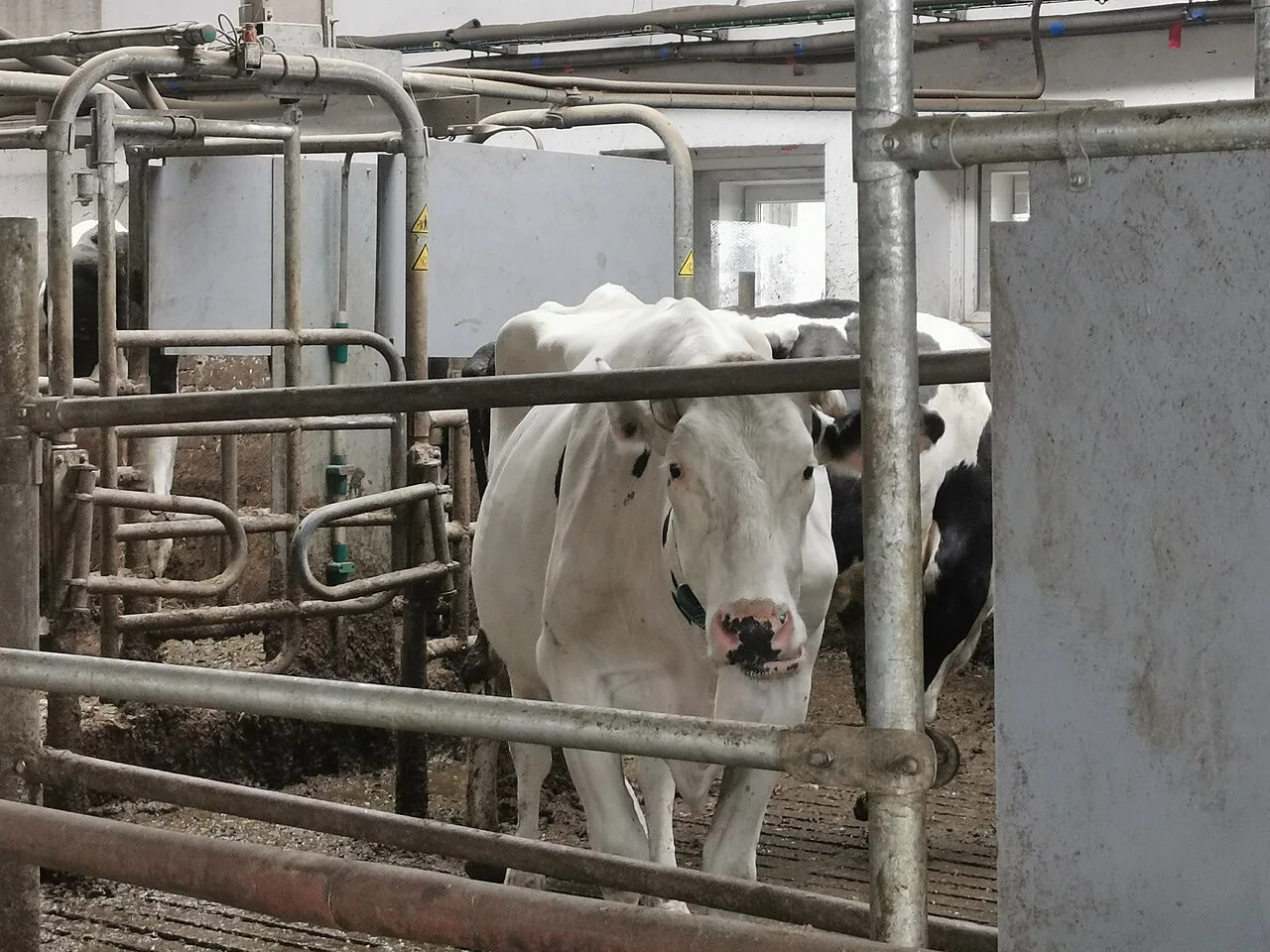
Photo: Mikinisk, CC BY-SA 4.0, via Wikimedia Commons
When it gets cold, the first instinct is to close every window, door and curtain. It feels kind, but it often does more harm than good. Cows breathe out a lot of moisture, and urine and dung add more. In a sealed shed, that damp air, ammonia and germs have nowhere to go.
Damp, stale air makes animals feel colder and is a major cause of pneumonia, especially in calves. Courtney Halbach of University of Wisconsin Extension explains in Wisconsin Agriculturist that "moisture increases the survival of bacteria in the air" and recommends at least four air changes per hour for cows and calves in cold weather.
Let air out up high. Keep ridge vents, upper windows or the top of curtains partly open so warm, moist air escapes from the roof.
Block drafts low down. Cold wind at cow and calf level is the problem, not fresh air. Close gaps under doors and use low windbreaks around resting areas.
Open up on sunny days to air the shed out, then partly close again in the evening.
Use the simple tests. Water dripping from the roof, wet walls or an ammonia smell that stings your eyes all mean too little air. Feel for wind at lying height: if you feel a breeze while crouching, so does your calf.
Respiratory problems that start in a closed shed spread fast. Learn the early signs in our guide to dairy cow diseases, symptoms and prevention, and log every case in DairyLogs health records so you can see which shed or group keeps getting sick.
Free tool: Cows burn more energy to stay warm. Rework your winter ration and see the daily feed cost per cow. Open the Cow Feed Calculator →
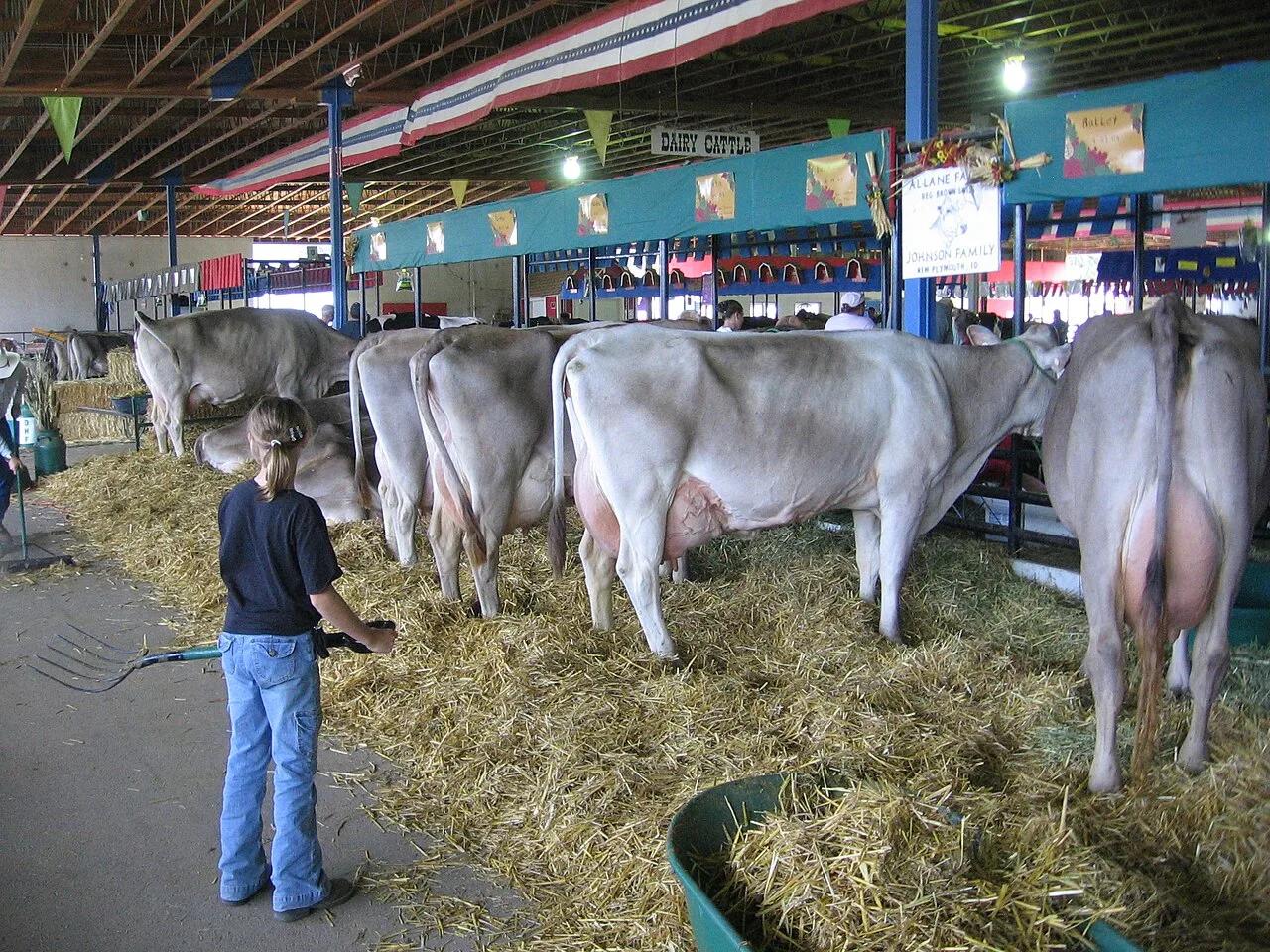
Photo: Kencf0618, CC BY-SA 3.0, via Wikimedia Commons
A wet cow is a cold cow. Her lower critical temperature jumps from about -7°C to about 12°C once her coat is wet, so dry bedding matters as much as feed.
A cow's hair coat only insulates when it is dry. Once she lies in wet, dirty bedding, the coat flattens and the cold goes straight through.
Wet bedding causes three problems at once:
Cows lie down less. A cow needs long, comfortable lying time to produce well. On cold, wet ground she stands, and milk drops.
More mastitis. Damp, dirty bedding is perfect for bacteria, and the udder sits right on it.
Frostbitten teats. University of Minnesota Extension notes that cows leaving the parlour with wet teats are among the first to get frostbite.
Bed deep. Use a thick layer of straw, rice husk, sawdust or other dry material, and add fresh bedding every day.
Remove wet patches daily, especially near water troughs and at the back of stalls.
Do the knee test. Kneel on the bedding for 20 seconds. If your knees come up wet, it is too wet for your cows.
Fix drainage and scrape alleys often so urine does not soak into resting areas.
Dry teats before cows go out into the cold after milking.
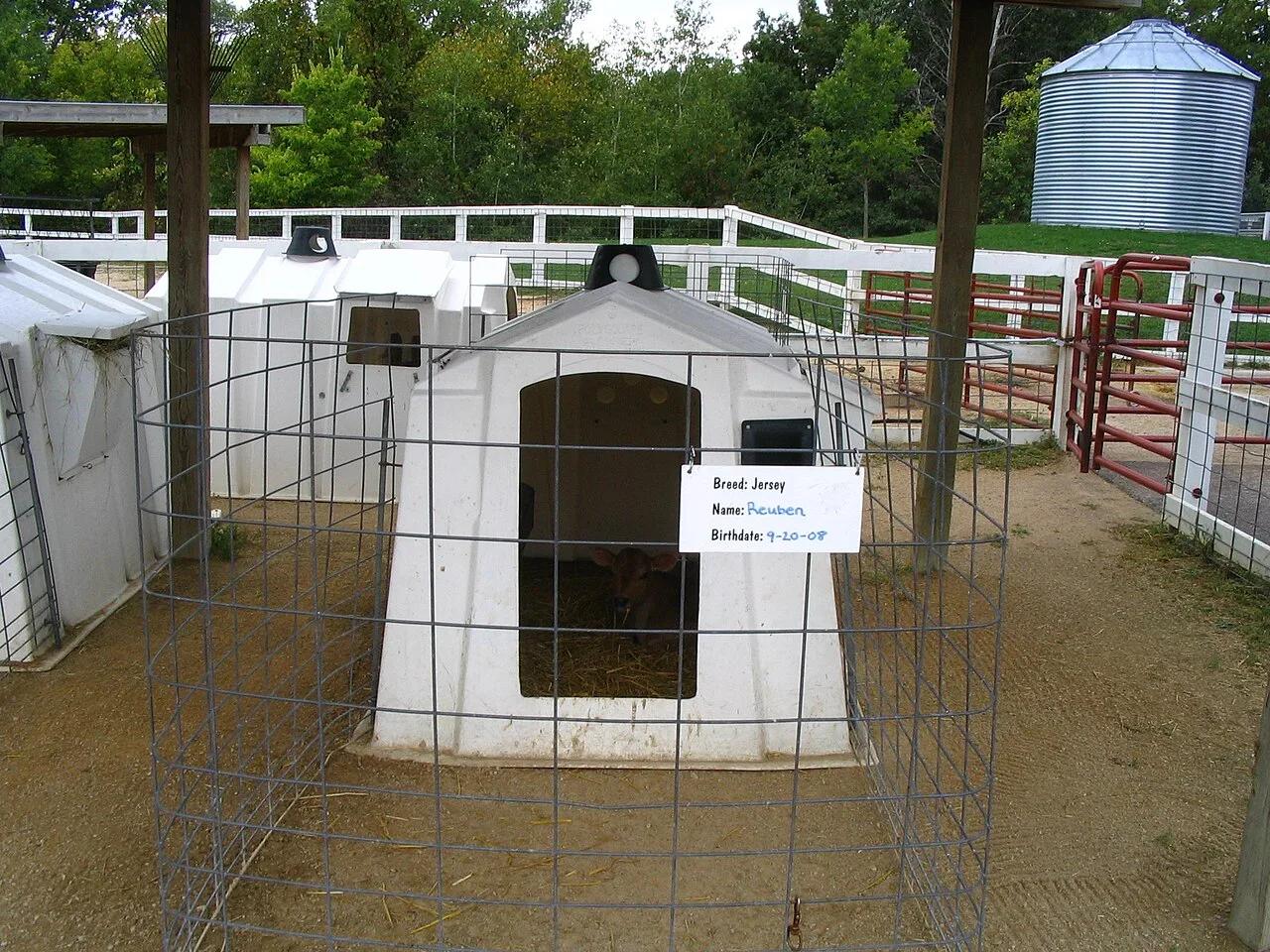
Photo: FelixCheng, CC BY-SA 3.0, via Wikimedia Commons
Calves feel the cold long before adult cows. UW-Madison Division of Extension puts the lower critical temperature at about 9°C (48°F) for calves under one month old, and as high as 13°C (56°F) on the day of birth. Below that, a calf burns its milk to stay warm instead of using it for growth and immunity. That is how winter calves end up with scours, pneumonia and slow growth, which costs you milk years later when they join the milking herd.
Deep straw. Straw is the best winter calf bedding because it traps warm air. Aim for a "nesting score of 3", meaning the calf's legs are completely hidden when it lies down.
Calf jacket. A common rule of thumb is to use a jacket when the ground is frozen and the calf is under about three weeks old. Trials summarised by CAFRE found jackets raised calves' skin temperature by about 6°C. Keep jackets clean and dry, wash them between calves and check the fit as the calf grows. A jacket supports good bedding; it never replaces it.
Extra milk. Young calves eat little starter, so extra energy has to come from milk. Feed more per meal or add a third feed in very cold weather. If you use milk replacer, stay within the manufacturer's mixing rate.
Warm water and colostrum. Offer water close to body temperature, and make sure every newborn gets enough colostrum in the first few hours and is dried off quickly after birth.
Planning winter calvings ahead makes all of this easier. Use the calving date calculator to see who is due in the coldest weeks, and track every birth and newborn with DairyLogs calving records. If you are drying cows off before winter, follow our dry-off feeding guide so they calve in good condition.
Run through this short list every day from the first cold night until spring:
Water is clean, flowing and not ice-cold.
The ration has enough dry fodder and energy, and cows are cleaning up their feed.
Air moves out at the roof, with no drafts at lying height.
Bedding passes the knee test.
Calves have deep straw, a clean jacket if they are very young, and enough milk.
Yards and alleys are not frozen or slippery. Cows on icy floors show heat less, so follow our tips to improve heat detection in dairy cows.
Daily milk is recorded, so any drop is caught within a day.
The farms that hold their milk through winter are usually the ones that notice problems first. DairyLogs keeps daily milk, feed, health and calving records in one place on your phone, so you can see a drop the morning it happens and know which cow, group or shed to check.
Milk recording shows yield per cow and per day, so a frozen trough or a feed problem shows up straight away.
Feed management tracks your ration and stock so you do not run out of dry fodder mid-winter.
Reports compare this winter with last winter, so you can see whether your changes are working.
New to farm records? Follow our one-week plan to digitize your dairy, or start with DairyLogs for free before the cold sets in.
Milk drops in winter because cows spend extra energy staying warm, drink less when water is ice-cold, and often get the same ration as in summer. Wet bedding and damp, closed sheds make cold stress worse.
Cows drink best when water is cool to lukewarm, roughly 4°C to 18°C (40 to 65°F). It should never be frozen or icy. Young calves do best with water close to body temperature.
Give clean, lukewarm water, raise dry fodder and energy in the ration, keep the shed ventilated without drafts, keep bedding deep and dry, and record milk daily so you can act on any drop quickly.
No. Block cold drafts at animal level, but keep openings high up so moist air and ammonia can escape. A sealed shed raises the risk of pneumonia, especially in calves.
A good rule is to use a jacket when the ground is frozen and the calf is under about three weeks old, or when a newborn or sick calf is in cold, damp weather. Always pair it with deep, dry straw.
Winter losses are easiest to stop when you can see them early. DairyLogs keeps a simple daily record of every cow's milk, feed and health.
Log milk per cow and catch sudden drops the same day
Track feed use and cost as you adjust winter rations
Record calf health, treatments and weights through the cold months
Create your free DairyLogs account → No credit card needed.
Managing dairy cattle in cold weather (University of Minnesota Extension)
Cold stress in dairy calves (UW-Madison Division of Extension)
Use of calf jackets to mitigate cold stress and improve calf welfare (CAFRE)
Prepare barn ventilation system for winter (Wisconsin Agriculturist)
Combat cold stress with quality forage (Hay & Forage Grower)
Cold weather stresses cows too (Vita Plus)
Want tools that match these practices? Start free with DairyLogs.